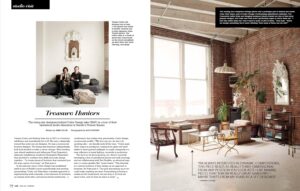
The rising-star designers behind Codor Design take GRAY on a tour of their fantastical studio-laboratory in Seattle’s Pioneer Square.
Tamara Codor and Sterling Voss met in 2011 at a furniture exhibition and immediately hit it off. She was a classically trained fine artist and set designer. He was a commercial furniture designer. The timing was fortuitous: independently, both had decided to make a career change. After bonding over shared aesthetics and influences (Tony Duquette’s elaborate installations, books by Christopher Alexander), they decided to combine their skills and make things together—”to create pieces of furniture that command you the way a piece of art does,” as Voss puts it.
In the past two years, Codor Design has established itself as one of Seattle’s most unpredictable and exciting partnerships. Codor and Voss share a fearless approach to experimenting with materials; a low tolerance for boredom; an intense work ethic; and serious hermit tendencies—a combination that makes their partnership uncommonly prolific. (“We don’t go out, we don’t do anything else—we literally work all the time,” Codor says.)
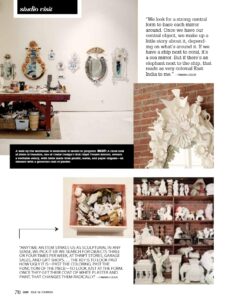
“ANYTIME AN ITEM STRIKES US AS SCULPTURAL IN ANY SENSE, WE PICK IT UP. WE SEARCH FOR OBJECTS THREE OR FOUR TIMES PER WEEK, AT THRIFT STORES, GARAGE SALES, AND GIFT SHOPS. THE KEY IS TO LOOK PAST HOW UGLY IT IS—PAST THE COLORING, PAST THE FUNCTION OF THE PIECE—TO LOOK JUST AT THE FORM. ONCE THEY GET THEIR COAT OF WHITE PLASTER AND PAINT, THAT CHANGES THEM RADICALLY.” —TAMARA CODOR
Their output is prodigious, ranging from glass-and-steel tables to hand-painted wallpaper to maple casegoods to a new collection of metal lighting, currently in production. The duo’s to-do list is growing, too: they’re currently developing a line of upholstered pieces and wall coverings and are collaborating with Ben Verellen, an electrical engineer, to create speaker-like “music boxes.” This diversity is a natural evolution of their design-as-art approach to business. As Voss puts it, “Our goal was setting up so we could make anything we want. If something is boring or makes us feel constrained, we just drop it. It’s how we want to live, and it’s how we want to work.”
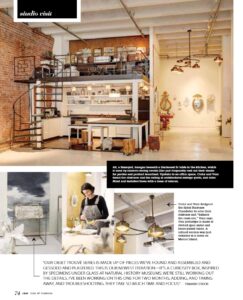
“OUR OBJET TROUVÉ SERIES IS MADE UP OF PIECES WE’VE FOUND AND ASSEMBLED AND GESSOED AND PLASTERED. THIS IS OUR NEWEST ITERATION—IT’S A CURIOSITY BOX, INSPIRED BY SPECIMENS UNDER GLASS AT NATURAL HISTORY MUSEUMS. WE’RE STILL WORKING OUT THE DETAILS. I’VE BEEN WORKING ON THIS ONE FOR TWO MONTHS; ADDING, AND TAKING AWAY, AND TROUBLESHOOTING. THEY TAKE SO MUCH TIME AND FOCUS.” —TAMARA CODOR
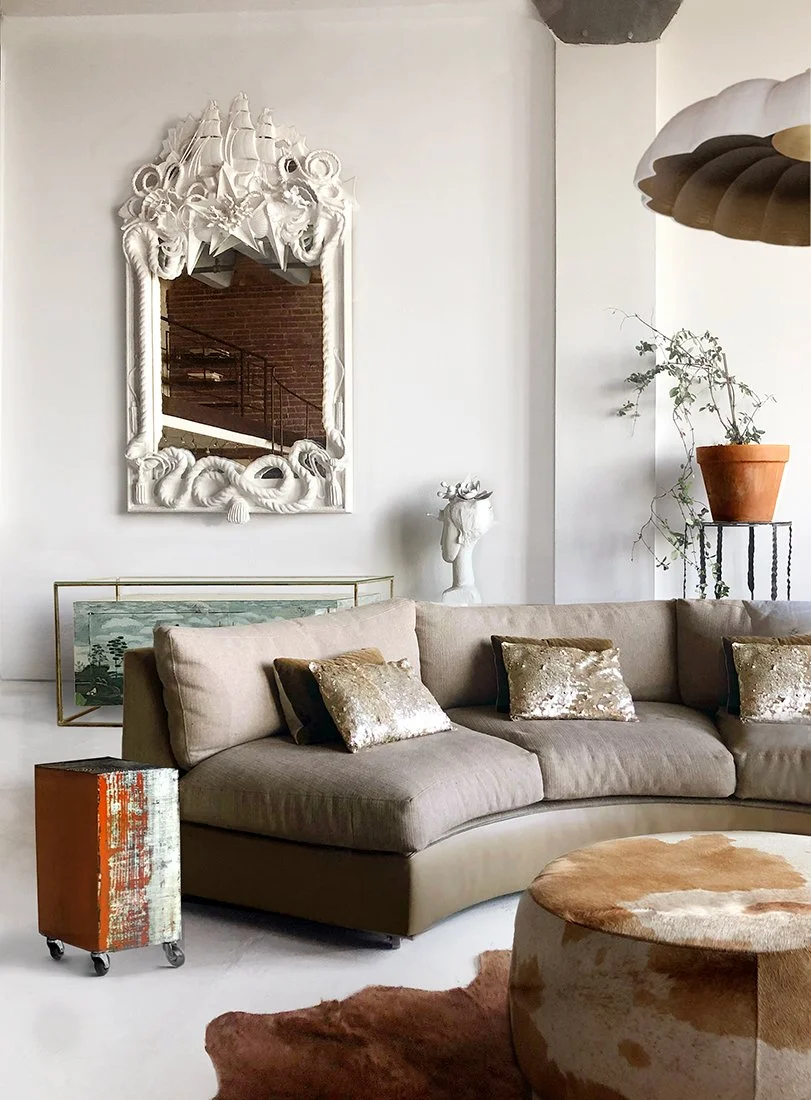
“I’M ALWAYS INTERESTED IN DYNAMIC COMPOSITIONS. THIS PIECE READS AS REALLY THREE-DIMENSIONAL—FROM ANY POSITION YOU LOOK AT IT. I LIKE MAKING PIECES THAT THROW REALLY GREAT SHADOWS—MAYBE THAT’S FROM MY YEARS AS A SET DESIGNER.” —TAMARA CODOR