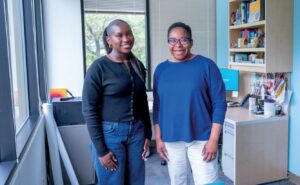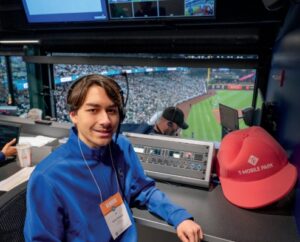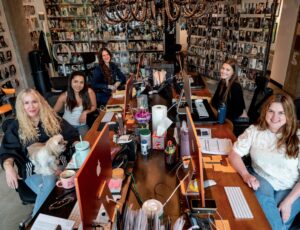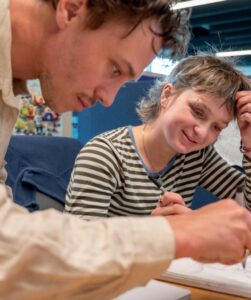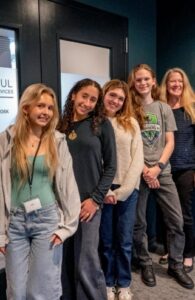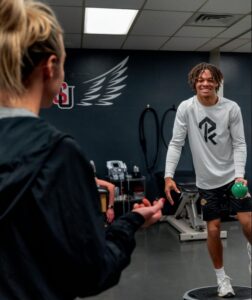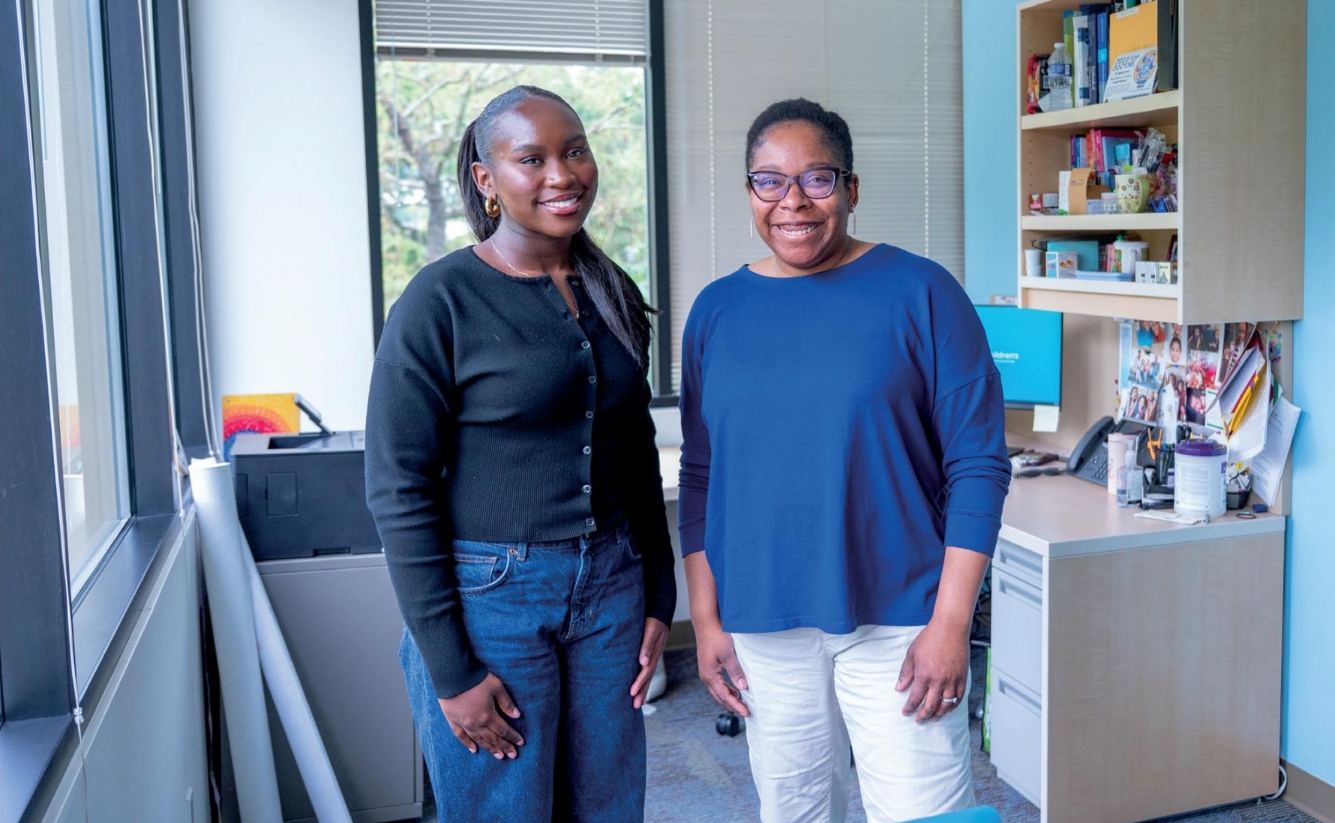
Every May, SAAS’s 12th graders step beyond the classroom for their Senior Project, a month-long internship that builds on the entrepreneurial skills they’ve been developing throughout their education. We connected with a crew of seniors at their project sites to learn more about the meaning and impact of this signature program.
The Senior Project is a capstone experience at Seattle Academy. During the final month of senior year, students step out of the classroom and into the professional world—working as interns in labs, classrooms, art studios, and offices, and gaining experience and insight into careers and causes they care about.
What started back in 2004 as a small, optional program has grown into a much-anticipated rite of passage for the senior class. This year, 181 students worked at 104 different sites across the Seattle area, from the UW Applied Physics Lab to Microsoft to an immigration law firm. Along the way, students sharpen their résumés, practice interviewing, and learn how to show up in professional spaces—all while chasing something they’re curious about. Sometimes it confirms a future path; sometimes it rules one out. Either way, it sticks with them.
Given the lasting impact, it’s fitting that one of our own—SAAS alum Rachel Leavitt-Baron ’08—now leads the program as our Community Action Program Coordinator. “I remember how it felt to wear a hospital badge during my own Senior Project at Seattle Children’s Hospital,” she recalls. “I felt like I belonged. Even though I didn’t go into medicine, that experience taught me how to advocate for myself and carry myself in professional spaces.” Now, she brings that same spirit to helping current seniors navigate their own Senior Projects. We sat down with Rachel to hear more about what this program means to her—and what it offers SAAS seniors today.
What do you remember about your own Senior Project?
I was at Seattle Children’s Hospital in their Family Resource Center. I remember feeling so grown up walking in with my badge every day. I had this sense of, “I can carry myself in a professional environment—I know how to interact with adults.” That confidence stuck with me.
What’s the deeper value of Senior Projects—and why do they matter so much at SAAS?
I think it’s really about showing up in the world. You’re stepping out of school and into a space where you’re not treated like a kid, and that’s really powerful. You’re being asked to participate, to contribute, to be part of a team. Sometimes students discover, “Oh wow, I’m capable of so much more than I thought.” And sometimes they realize, “This isn’t what I want to do,” and that’s just as important. The whole experience helps students figure out not just what they want to do, but who they want to be.
How has the program evolved over time?
When I did my project, it wasn’t required—maybe only a quarter of the class participated. Now it’s a full-grade experience, which means we’ve had to build out more support systems to help everyone find a meaningful placement. We do a lot more coaching now: résumé workshops, mock interviews, helping students write emails, practicing how to introduce themselves. It’s really about giving them the tools to advocate for themselves.
What do you love about the program?
I love that it gives students the chance to explore something they’re curious about. There’s something so powerful about showing up every day, building relationships with adults, and doing work that matters outside of a school context. I also just love hearing about the wide range of things students are interested in. Every year I learn about new corners of the world because of what they choose to explore.
What’s one thing you hope every student takes away from the experience?
I hope they realize that they’re capable of showing up in the world as full humans, not just students. That they can enter a new space, ask good questions, offer something of value, and learn in a different way. I hope it makes them feel excited and more prepared for whatever comes next.