Each year, SAAS faculty and staff develop and lead trips to destinations across the world as part of our robust Outdoor and Travel Program. The goal is to provide opportunities for students to grow individually and as a group, discover new strengths, and develop a responsible understanding about the cultures, people, and the lands through which they travel.
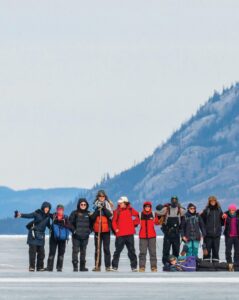
 This year we’re offering 14 unique trips over school breaks, including community service–focused immersions in New Orleans and Tanzania, an annual Senior trip to the Yukon Territory (eight days camping on a frozen lake!), a Model UN trip to Washington, DC, trips to Japan and the Swiss Alps, and much more.
Heading up this signature SAAS program is Matt Edenfield, our new Outdoor Trips and Travel Director. With over 15 years of experience in outdoor education, Matt brings a wealth of expertise to our program, having worked as an instructor, guide, and administrator with organizations like Outward Bound and the National Outdoor Leadership School. Matt’s extensive field experience, including over 150 “field weeks” across the American West and South America, has shaped his deep belief in the power of hands-on, immersive learning.
In January 2025, soon after he returned from his first outdoor adventure with SAAS students—a three-day AIARE Avalanche Education Course with high schoolers, in preparation for a backcountry skiing and snowboarding trip on Mount Baker—we sat down with Matt to learn more about his vision for the Outdoor and Travel program, highlights from the recent trip, and what’s in store for the year ahead.
You’ve just returned from your first trip with SAAS students. Can you share what stood out most to you from this trip and your time with the students?
Whenever students have the opportunity to be outside for an extended period, they come back changed in some way. That change isn’t always immediate; it could be years down the road before they have that “aha!” moment and realize the connection. Over the years, I’ve consistently seen students return from trips feeling inspired and empowered to act. Trips, like the ones SAAS offers, can fundamentally shift a student’s view of their world and their role in that world. As an educator, we can’t force transformation to happen, so we strive to facilitate experiences to optimize the possibility. But when those transformative experiences do occur it can feel like magic. We definitely saw some of those moments during the course.
 The AIARE Avalanche Course is this really unique learning laboratory where students get direct interaction with foundational knowledge and technical skills, and how to apply all of that in real-world situations. Students have the opportunity to try on a lot of different hats while we’re out there—sometimes they’re meteorologists, sometimes they’re geologists, and sometimes they’re engineers. They are empowered to step into leadership roles, put their newfound skills to the test, and practice decision-making in the field.
One of the most valuable takeaways from the trip is watching students gain self-confidence and perspective. They get opportunities to reflect deeply and, in a way, prepare themselves for challenges they’ll face in life outside of the classroom. In our debriefs after a day in the backcountry, we ask: When were we most at risk today? What would we do differently? What did we learn about ourselves or us as a group?
You can see how that same framework can translate back to their life and classroom environments. Outdoor programs may teach skills like wilderness medicine or whitewater rafting, but that’s not the primary goal. The real learning is about the self and the world from engagement in the activities. The outdoors are simply an intense classroom for life itself. One of my goals at SAAS is for all trips to incorporate both recreational and curricular components.
You were with the students during some really hands-on learning moments, like evaluating avalanche risk and using rescue equipment. How did you see the students respond to that kind of real-world, immersive learning?
One of the most important skills students can take away from outdoor education is judgment and decision-making—how to make plans A, B, and C, and being okay with having to strategically change those plans in the moment. It gives kids a toolbox for navigating uncertainty and a tolerance for adversity. You plan for the worst, hope for the best, and respond accordingly.
Being hands-on in these real-world situations, students gain a better understanding of how terrain, snowpack, weather, and human factors affect avalanche risk. This environment presents a very different kind of learning than what they’d experience in the classroom. It’s a holistic education that blends the mind, body, and emotions. You get to see students use what they’ve learned and put it into action—and that’s powerful. It’s not just academic knowledge—it’s skills that they can carry with them for the rest of their lives.
These moments also highlight something really important: the real application of their learning. As they construct snow assessment pits or practice rescue scenarios, they get a deeper appreciation for what backcountry travel actually involves. They learn to respect the process—everything that led up to finally skiing down the mountain.
What are some of the most important lessons that you hope students take away from these outdoor trips?
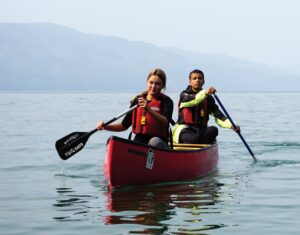 I think connection is a prominent thread that runs through those trips. Connection to self, connection to others, and connection to the planet—those three things are intertwined. I always hope that students come away with a stronger sense of who they are, how they relate to others, and how they fit into the bigger picture of the world. Trips allow students to better understand their strengths, habits, and areas for growth.
A big part of that is helping students see how teamwork and leadership work in practice. How you learn to conduct yourself in a challenging outdoor environment with a small group of peers is precisely how to approach the big challenges of life. The understanding and appreciation that come from mutual effort, support, and trust evokes a greater sense of social responsibility. When students are thrust into a leadership role and become responsible for making real-time decisions with their peers, the effects become so much more tangible. They learn to take initiative and communicate compassionately, but also learn when to step back and allow others to lead when the moment calls for it.
Another piece is the balance between self-reliance and technology. We often think of outdoor experiences as an opportunity to unplug and disconnect, but in reality, we still use technology in a very responsible and technical way out there. Students learn to navigate with mapping tools, check avalanche forecasts, and use rescue equipment, which helps them see the relationship between practicing mindfulness and leveraging technology to stay informed and manage risk.
Looking ahead to later this winter, there’s a lot of excitement around the Mount Baker trip. What other trips or adventures are you most excited about in the upcoming school year, and why?
Ah, there’s a lot to look forward to! One trip I’m really excited about is the middle school cultural trip to Mexico City. There aren’t as many international trips for our middle school students, so it’s exciting to offer that experience. We want to continue developing trip progressions based on students’ development, and having an accessible international trip at this age is a great way to build student’s confidence.
Of course, the Senior Yukon Trip is always a highlight for the whole community. It’s this pinnacle experience that marks the end of a student’s journey at SAAS. This will be my first trip to the Yukon, so I’m thrilled to share that experience with the Class of 2025. Based on what I’ve gathered, there seems to be something magical ingrained into the ethos of this adventure. I can’t wait to see what happens this year!
We’re also excited about the Tanzania trip and the New Orleans trip. Both trips are service-oriented and intentionally incorporate global citizenship principles into their programming. And then we have the Caribbean snorkeling and yoga trip. It’s a new trip this year with a focus on mindfulness.
Plus, we’re running our first Switzerland backpacking trip, which will be incredible. I’m especially looking forward to the leadership progression aspect of that trip, where teachers will start the trip demonstrating how you lead a group through mountainous terrain in a safe manner. And then as the trip evolves, students will have more autonomy and responsibility, so eventually they’re making the decisions and running the show—with us as the resources instead of guides, supporting them as needed.
One of the key aspects of the trips you lead is safety, and you just went through this intensive avalanche training. How do you ensure that safety remains top-of-mind in every trip, and how do you balance fun and adventure with risk management?
When I think about planning trips, it always starts with risk management. The first question I ask is, “Can we mitigate, minimize, or eliminate the risks associated with this activity?” Then we go from there to see how we can provide a balanced experience that serves the whole community. Every trip is designed with that balance in mind—between offering challenge and ensuring that students are set up for success.
We do want to embrace a healthy amount of risk. We strive to offer trips where students can convert danger, fear, or anxiety into achievement and mastery through skill, cooperation, and hard work. The reality is that this is where real learning happens—when students push themselves and step outside of their comfort zone.
You’re stepping into a program that already has a strong foundation. As you start to make your mark, where do you see the program evolving?
We’re always assessing the trips catalog, looking at what’s working, what could be improved, and what students are most excited about. The goal is to create a holistic experience for every student, regardless of whether they’re going on an outdoor, service, or cultural immersion trip. But the key is making sure that every trip, no matter the focus, provides similar outcomes—growth, connection, and a shared experience that feels distinctly like a SAAS trip.
I’d love to see us find ways to make these trips more accessible. We need to figure out how to reduce barriers to entry so students can find trips that suit their skill level and goals, and then build up to more challenging ones. A part of this is ensuring that everyone, regardless of their background or experience level, has a chance to get involved.
In terms of destinations, you name it, it’s on the table. A lot of our trip ideas come from listening to the community—students, families, and faculty. We want to create a robust catalog that gives students a well-rounded set of experiences. But one of the things that stands out most to me is the demand for more trips, especially in the wake of the pandemic. We need to find creative ways to sustainably expand and serve the growing interest in travel. One thing I’d love to see us doing is more local and regional trips that are shorter in duration. I’d love to schedule SAAS trips over three-day weekends and holiday breaks.
What would you say to students and parents who may be hesitant about trying something like a backcountry skiing trip, or an outdoor adventure in general? What makes these experiences so valuable, and why should they consider signing up?
I’m a firm advocate that outdoor adventures and cultural trips are vessels for personal growth. It is a priority at SAAS to provide as many students as possible with bucket-list-style trips. As teachers on campus or leaders on trips, we strive to facilitate experiences that empower students to face unfamiliar and sometimes uncomfortable challenges.
There are years of community testimonials that indicate how SAAS trips can be life-changing and students learn more about themselves than any other SAAS experience. We’re here to support students and families throughout the trip process—before, during, and after. One of the most rewarding parts of my job and of these trips is watching students push beyond their hesitation and realize that they’re capable of so much more than they thought.