Don’t call him a designer—intrepid artist Roy McMakin is scything out his own creative path.
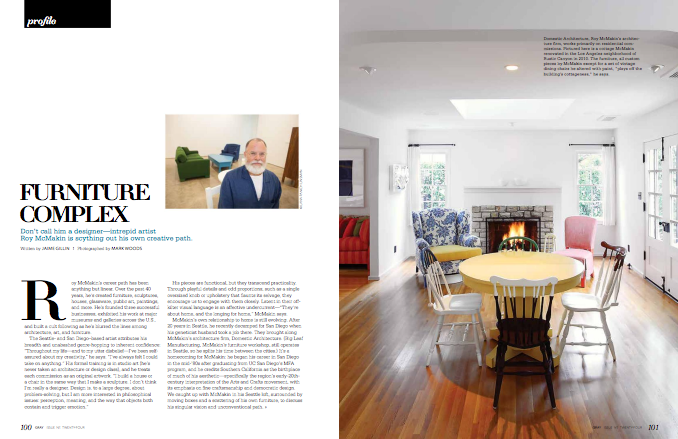
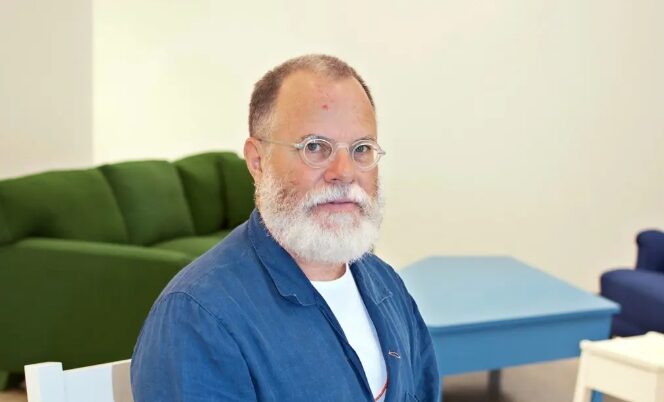
Roy McMakin’s career path has been anything but linear. Over the past 40 years, he’s created furniture, sculptures, houses, glassware, public art, paintings, and more. He’s founded three successful businesses, exhibited his work at major museums and galleries across the U.S., and built a cult following as he’s blurred the lines among architecture, art, and furniture.
The Seattle- and San Diego–based artist attributes his breadth and unabashed genre-hopping to inherent confidence: “Throughout my life—and to my utter disbelief—I’ve been self-assured about my creativity,” he says. “I’ve always felt I could take on anything.”
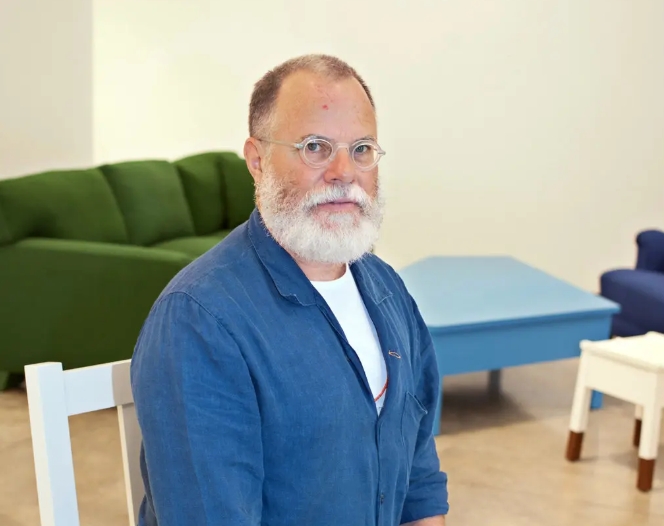 His formal training is in studio art (he’s never taken an architecture or design class), and he treats each commission as an original artwork. “I build a house or a chair in the same way that I make a sculpture. I don’t think I’m really a designer. Design is, to a large degree, about problem-solving, but I am more interested in philosophical issues: perception, meaning, and the way that objects both contain and trigger emotion.”
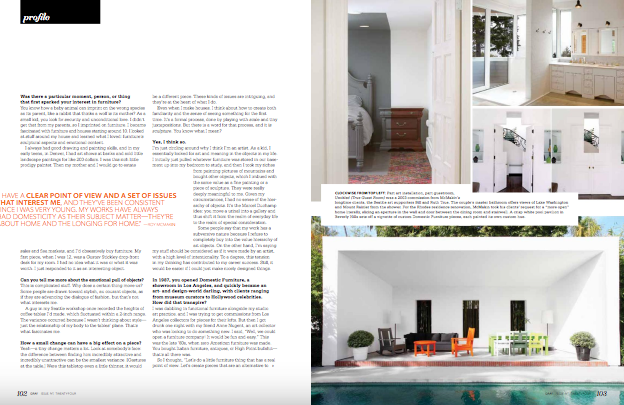
His pieces are functional, but they transcend practicality. Through playful details and odd proportions, such as a single oversized knob or upholstery that flaunts its selvage, they encourage us to engage with them closely. Latent in their off-kilter visual language is an affective undercurrent: “They’re about home, and the longing for home,” McMakin says.
McMakin’s own relationship to home is still evolving. After 20 years in Seattle, he recently decamped for San Diego when his geneticist husband took a job there. They brought along McMakin’s architecture firm, Domestic Architecture. (Big Leaf Manufacturing, McMakin’s furniture workshop, still operates in Seattle, so he splits his time between the cities.)
It’s a homecoming for McMakin: he began his career in San Diego in the mid-’80s after graduating from UC San Diego’s MFA program, and he credits Southern California as the birthplace of much of his aesthetic—specifically the region’s early-20th-century interpretation of the Arts and Crafts movement, with its emphasis on fine craftsmanship and democratic design.
We caught up with McMakin in his Seattle loft, surrounded by moving boxes and a scattering of his own furniture, to discuss his singular vision and unconventional path.
“YOU KNOW HOW A BABY ANIMAL CAN IMPRINT ON THE WRONG SPECIES AS ITS PARENT, LIKE A RABBIT THAT THINKS A WOLF IS ITS MOTHER? AS A SMALL KID, YOU LOOK FOR SECURITY AND UNCONDITIONAL LOVE. I DIDN’T GET THAT FROM MY PARENTS, SO I IMPRINTED ON FURNITURE.”
Was there a particular moment, person, or thing that first sparked your interest in furniture?
I became fascinated with furniture and houses starting around 10. I looked at stuff around my house and learned what I loved: furniture’s sculptural aspects and emotional content.
I always had good drawing and painting skills, and in my early teens, in Denver, I had art shows at banks and sold little landscape paintings for like 200 dollars. I was this rich little prodigy painter. Then my mother and I would go to estate sales and flea markets, and I’d obsessively buy furniture. My first piece, when I was 12, was a Gustav Stickley drop-front desk for my room. I had no idea what it was or what it was worth. I just responded to it as an interesting object. I bought other objects, which I imbued with the same value as a fine painting or a piece of sculpture. They were really deeply meaningful to me.
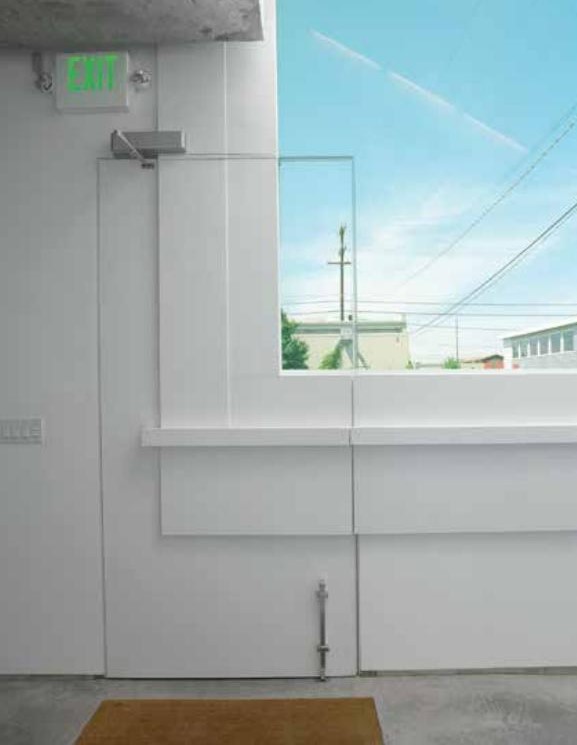 Given my circumstances, I had no sense of the hierarchy of objects. It’s the Marcel Duchamp idea: you move a urinal into a gallery and thus shift it from the realm of everyday life to the realm of special consideration. Some people say that my work has a subversive nature because I refuse to completely buy into the value hierarchy of art objects. On the other hand, I’m saying my stuff should be considered as if it were made by an artist, with a high level of intentionality. To a degree, this tension in my thinking has contributed to my career success. Still, it would be easier if I could just make nicely designed things.
Can you tell me more about the emotional pull of objects?
This is complicated stuff. Why does a certain thing move us? Some people are drawn toward stylish, au courant objects, as if they are advancing the dialogue of fashion, but that’s not what interests me.
A guy in my Seattle workshop once recorded the heights of coffee tables I’d made, which fluctuated within a 2-inch range. The variance occurred because I wasn’t thinking about style—just the relationship of my body to the tables’ plane. That’s what fascinates me.
How a small change can have a big effect on a piece?
Yeah—a tiny change matters a lot. Look at somebody’s face: the difference between finding him incredibly attractive and incredibly unattractive can be the smallest variance. [Gestures at the table.] Were this tabletop even a little thinner, it would be different. These kinds of issues are intriguing, and they’re at the heart of what I do.
Even when I make houses, I think about how to create both familiarity and the sense of seeing something for the first time. It’s a formal process, done by playing with scale and tiny juxtapositions. But there is a word for that process, and it is sculpture. You know what I mean?
Yes, I think so.
I’m just circling around why I think I’m an artist. As a kid, I essentially looked for art and meaning in the objects in my life. I initially just pulled whatever furniture was stored in our basement up into my bedroom to study, and then I took my riches from painting pictures of mountains.
“I HAVE A CLEAR POINT OF VIEW AND A SET OF ISSUES THAT INTEREST ME, AND THEY’VE BEEN CONSISTENT SINCE I WAS VERY YOUNG. MY WORKS HAVE ALWAYS HAD DOMESTICITY AS THEIR SUBJECT MATTER—THEY’RE ABOUT HOME AND THE LONGING FOR HOME.”
In 1987, you opened Domestic Furniture, a showroom in Los Angeles, and quickly became an art- and design-world darling, with clients ranging from museum curators to Hollywood celebrities. How did that transpire?
I was dabbling in functional furniture alongside my studio art practice, and I was trying to get commissions from Los Angeles collectors for pieces for their lofts. But then I got drunk one night with my friend Anne Nugent, an art collector who was looking to do something new. I said, “Well, we could open a furniture company! It would be fun and easy.” This was the late ’80s, when zero American furniture was made. You bought Italian furniture, antiques, or High Point bullshit—that’s all there was.
So I thought, “Let’s do a little furniture thing that has a real point of view. Let’s create pieces that are an alternative to Postmodernism—connected to it but without its cartoonish nature or overtness—and which don’t quote as much as deeply embed references to older architecture and design into their forms. I was thinking you need to stare down the past to move into the future, and about objects that were simultaneously part of the present, the past, and the future.
How did you get into designing houses? That’s quite a leap in scale.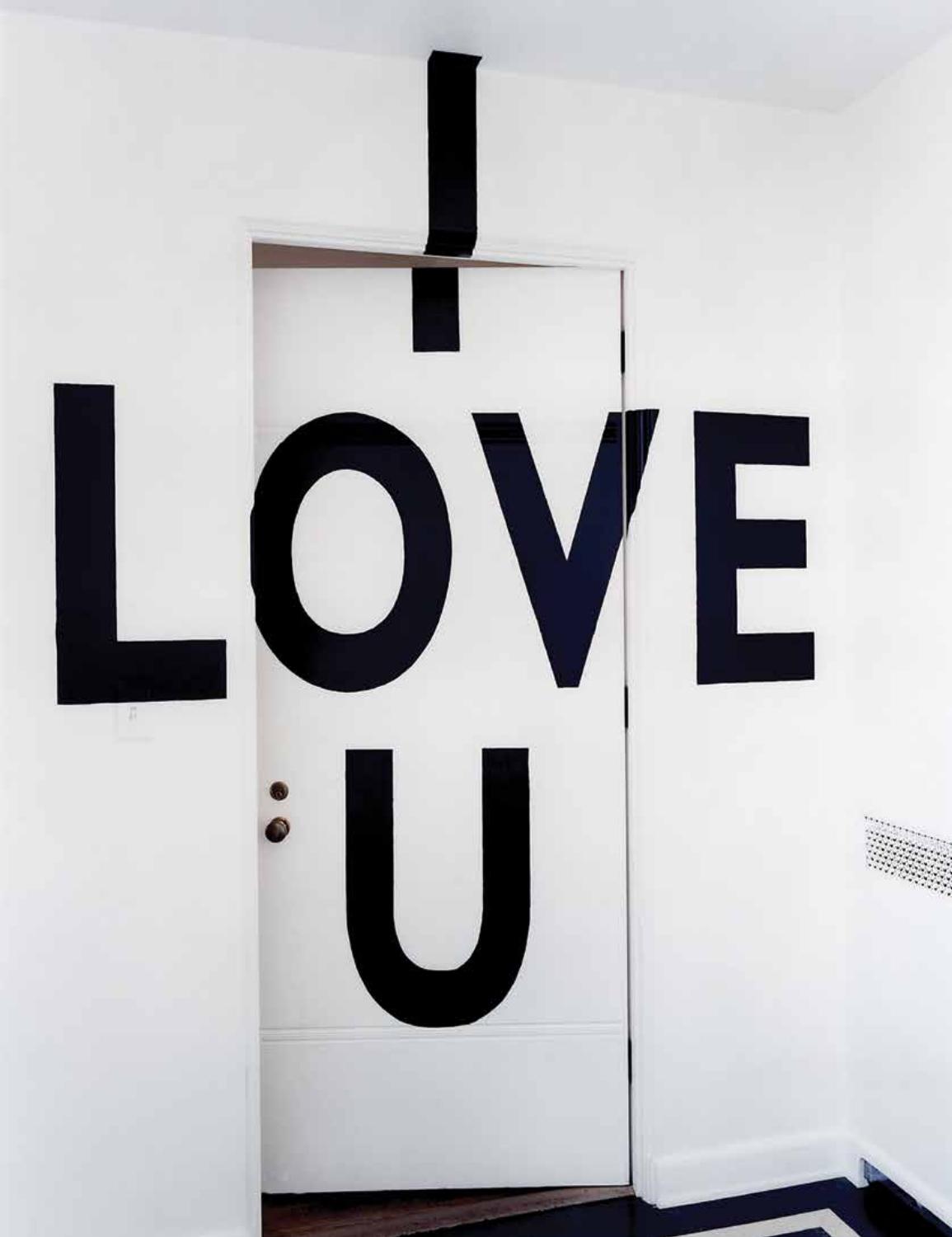 A couple of clients came into Domestic Furniture to buy a sofa for a house they were remodeling. They showed me their plans, which they felt a little negative about. I offered to design it for them—I presented my notion of what I wanted to do, and they commissioned it. In hindsight, now that I’m older and wiser, I’m like, “What were these people thinking? ‘I like your table, so you can design a multimillion-dollar house?’” It seemed reasonable at the time, but it’s incredible to me now. But then more and more people asked me to design their homes.
Your career has been expansive: it’s continually encompassed more project typologies, materials, and design genres. Are you still spreading out or narrowing in?
When you’re my age—basically 60—you wonder what you really want to do. Until now I’ve just done all kinds of things. I am in a pretty contemplative place right now and getting tired of the hustle of getting commissions and running companies. I’m building a home in San Diego for my husband and myself, and I would love to do a few more very serious residential commissions with the right people. I’ve written a children’s book about objects—I just need to do the illustrations. There’s also a part of me that just wants a studio art practice again: I’ll have my studio in my house, and I’ll do little drawings of vases or something, and people can buy them. Or not.
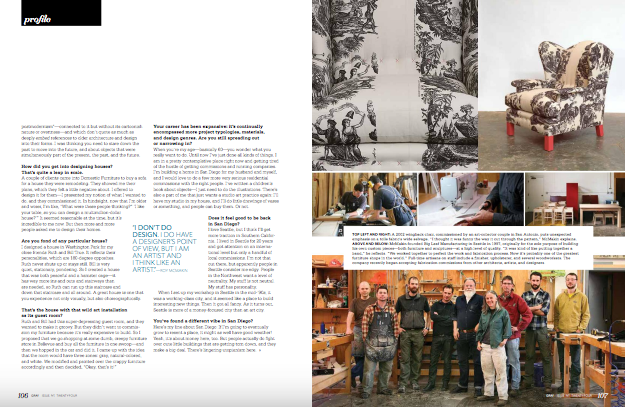
Are you fond of any particular house?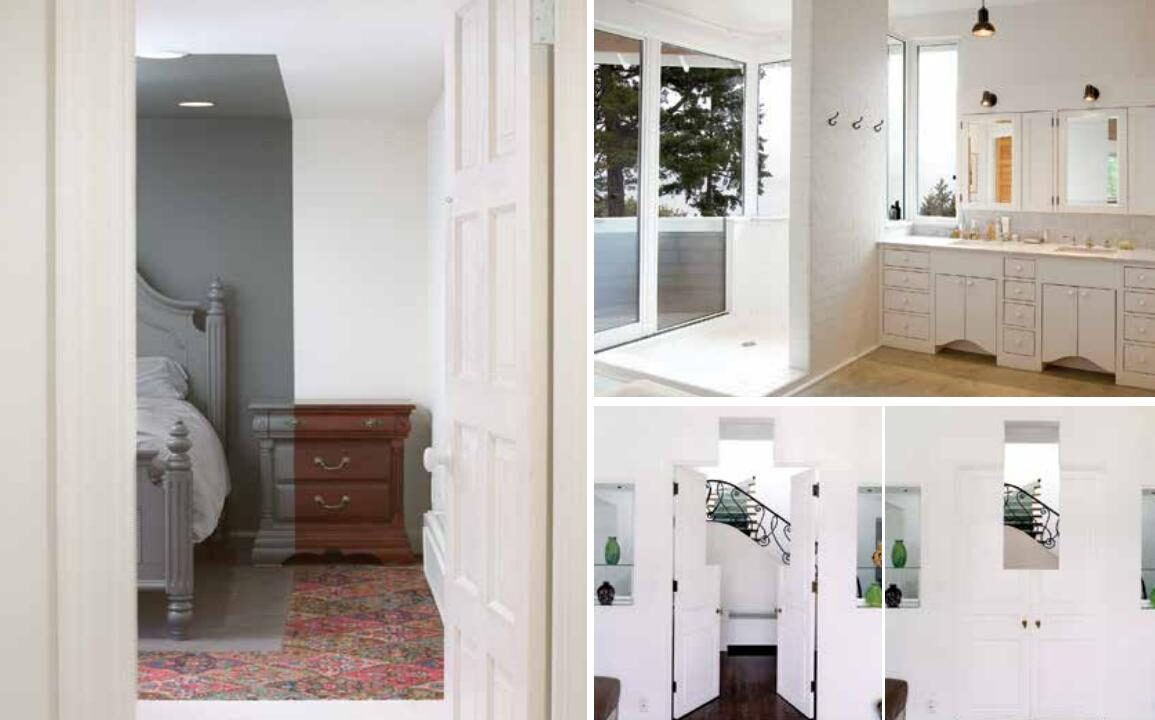 I designed a house in Washington Park for my close friends Ruth and Bill True. It reflects their personalities, which are 180-degree opposites. Ruth never shuts up or stays still. Bill is very quiet, stationary, pondering. So I created a house that was both peaceful and a hamster cage—it has way more ins and outs and stairways than are needed, so Ruth can run up this staircase and down that staircase and all around. A great house is one that you experience not only visually, but also choreographically.
That’s the house with that wild art installation as its guest room?
Ruth and Bill had this super-depressing guest room, and they wanted to make it groovy. But they didn’t want to commission my furniture because it’s really expensive to build. So I proposed that we go shopping at some dumb, creepy furniture store in Bellevue and buy all the furniture in one swoop—and then we hopped in the car and did it. I came up with the idea that the room would have three zones: gray, natural-colored, and white. We modified and painted over the crappy furniture accordingly and then decided, “Okay, that’s it!”
Does it feel good to be back in San Diego? I love Seattle, but I think I’ll get more traction in Southern California. I lived in Seattle for 20 years and got attention on an international level but only a handful of local commissions. I’m not that out there, but apparently people in Seattle consider me edgy. People in the Northwest want a level of neutrality. My stuff is not neutral. My stuff has personality.
When I set up my workshop in Seattle in the mid-’90s, it was a working-class city, and it seemed like a place to build interesting new things. Then it got all fancy. As it turns out, Seattle is more of a money-focused city than an art city.
You’ve found a different vibe in San Diego?
Here’s my line about San Diego: If I’m going to eventually grow to resent a place, it might as well have good weather! Yeah, it’s about money here, too. But people actually do fight over cute little buildings that are getting torn down, and they make a big deal. There’s lingering utopianism here.
Read the story online here.